The Official Description
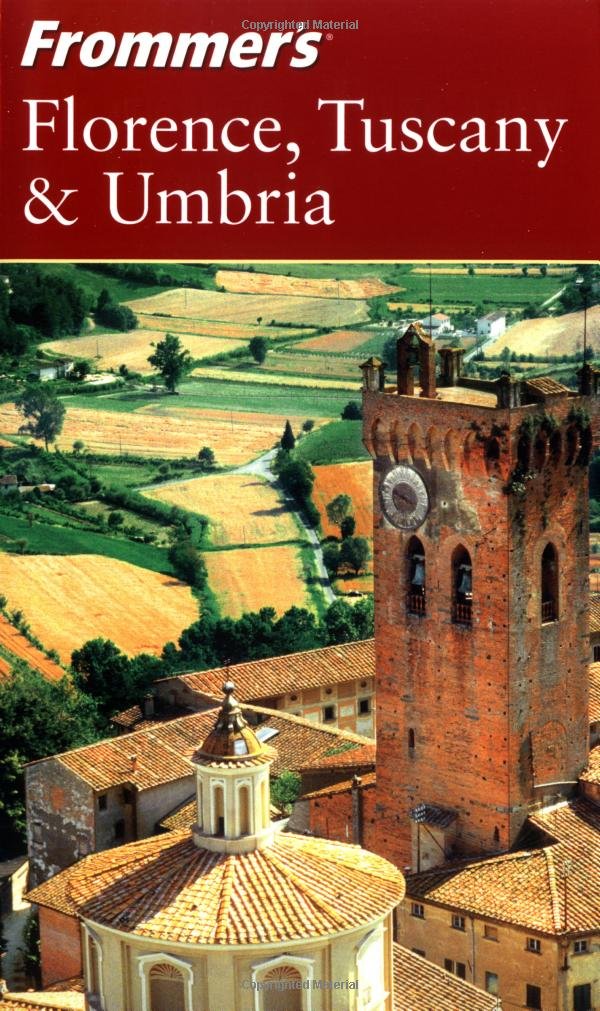
Meticulously researched by our expert author, Frommer’s Tuscany & Umbria is the only guide you need to discover the region’s artistic treasures, Renaissance architecture, rustic villages, vineyards, and fabulous shopping.
This authoritative guide will reveal the best wines and hearty regional dining, tell you how to rent your own romantic villa, send you on scenic bike tours, and lead you away from the tourist crowds so you can discover the true flavor and leisurely pace of this sunny corner of Italy.
We’ll show you the best of Florence and its treasure trove of art and architecture, then take you through the medieval alleyways of Siena, along the Chianti Road, and to lovely towns like San Gimignano, Lucca, Assisi, Perugia, and more.
Every one of our honest, in-depth hotel reviews is based on a recent personal inspection; every restaurant has been tried personally; and every sight, shop, and stroll was checked out in detail.
You’ll get the latest trip-planning advice, valuable cultural insights, wonderful tips for venturing off the beaten path, and detailed, accurate maps. With Frommer’s in hand, it’s a snap to design the Italian adventure that’s right for you.
Honest Feedback
Do not leave your hotel without it
“This book was extremely useful and accurate. As an example, we could visit the Brolio Castle because we read that you have to find a rope, pull it, and wait until somebody opens the door. Two tourists who arrived before us had not entered… they did not carry the Frommer’s. All the directions, tips, locations of hotels, rating of restaurants, where hundred percent accurate. I will never travel without my Frommer’s. Congratulations.”
Just what I needed
“This is exactly what I needed before I leave for Europe for the semester. Great book. Excellent quality.”
Reid Bramblett really knows his subject
Author Reid Bramblett really knows his subject. Bramblett’s book is much richer in detail than the competition. He does an excellent job.
Best small-town Italy book on the market
If you’re going on the whirlwind “Rome-Florence-Venice” tour, don’t bother with this book. It isn’t for you. If you have a week or 2 to spend in central Italy, buy and read the whole book before you leave, and carry it with you everywhere.
My wife and I spent a month in Italy, and 2 weeks in Tuscany and Umbria. We had Rick Steve’s, Eyewitness, and Frommer’s with us. In large towns with good tourist infrastructure (Assisi, Sienna, etc) we found most of the books comparable. In the smaller towns where we usually spent our nights (Spoleto, Montepulciano, Sovana), only Frommer’s was worth looking at. We consistently found their hotel rooms most closely matched up with the written descriptions in the book, and their recommended restauraunts, while not as cheap as Rick Steve’s, were very good.
Particularly if driving (which is really the only way to see this region), the maps and directions far surpassed the other 2 books. Great maps of almost every town, no matter how small. The only deficiency was the lack of marking of the inbound and outbound roads on the map. Once I figured out where I was entering the town from though, the maps in this book could take me anywhere.
In the final analysis, all 3 books were useful, but we used each differently. We looked at Rick Steves and Eyewitness each morning, but carried only Frommers with us during the day. When we go back, this will be the only book we take.
Amazingly easy to use
Amazingly easy to use. Very portable, very complete.
Hotel information is close to encyclopedic
Love Frommer’s Guides
My friend and I took a driving trip of Florence and Tuscany. This guide was very helpful telling us what to visit in an orderly fashion. Always order my travel books from Amazon.
Detailed, accurate, and easy-to-read information for all price ranges
Money saver
I found this book practical and useful from the beginning. We havn’t gone yet but the car rental information alone saved us $100 on a 4 day rental. It’s a little heavy compaired to our other book but it looks like it covers Tuscany and Umbria thoroughly.
A Guide That Will Make You Feel at Home
This was a wonderful guide with witty, opinionated, (accurate in my estimation) comprehensive comment on the many sights and scenes that Tuscany has to offer. We used this guide constantly and exhaustively in the one week we recently spent there. The restaurant and hotel recommendations were uniformly splendid and we were fortunate to discover a new town and a new pasta shape when we ate pici in the hilltop town of Montepulciano, where we would never have considered staying but for this guide. Although I would also have liked to have had a guide with pictures of the attractions, the attraction of this guide makes it well worth that slight quibble. I would highly recommend it to anyone going to the region and I will certainly use it, or a newer edition, upon my hopefully soon return.
The best guide book I have ever used
A friend lent me a copy of the second edition of this book, just before I went to Tuscany on honeymoon with my wife last year. I didn’t expect much of it, as I had never found the recommendations in guide books terribly accurate or useful. On several occasions in the past, I had used them to help me acclimatise after moving to a different country: it rapidly became clear that their advice was old, too subjective or aimed at people with tastes too different to mine.
However, a dreadful meal at what turned out to be a tourist-trap restaurant pushed me to try out one of the alternatives recommended by Frommer’s. It surpassed our expectations by such a huge margin (the food better than almost any we had experienced in London, the furnishings more opulent and the price much less expensive) that we went with the author’s advice again and again after that.
Each time, he was right on the mark. The author combines a refined aesthetic sense with a cool financial head, and does not shy from saying what parts of the tourist experience in Tuscany are bound to disappoint.
It was as though we were able to phone a genial expat uncle each morning for tips on how to make the most of the tourist aspects of the honeymoon. The rest of it we worked out for ourselves – although it is worth saying that the reduction in stress engendered by the book helped everything else to go swimmingly.
Starting to fall apart from overuse
My “Frommer’s Tuscany and Umbria” written by Reid Bramblett is starting to fall apart from overuse. If you go to my favorite areas, take this along. His selections are based around the budget of a normal middle-class American. Sensible, affordable hotels and restaurants that offer comfortable rooms and good food. Mr. Bramblett’s explanations of the art of Italy are good, as well.
Many thanks for a brilliant guidebook
I have just returned from Italy, where our family had a wonderful holiday in Tuscany and Umbria. One of the main causes of our enjoyment was the help we received from your book. Truly, it was in constant use for the whole fortnight. As a result we felt well informed, and made the best use of our time.
Your guide is good in every department, but we found particularly helpful your tips on parking (spot on) and your perceptive restaurant tips. We tried the following, and all were very good, especially the first two (Arezzo: Buce di san Francesco; Gubbio: Taverna del Lupo; Perugia: Il cantinone; Seinna: Antica Trattoria papei).
Many thanks for a brilliant guidebook. Interestingly, one of the houses we stayed in had copies of your competitor publications by Blue, Insight,. Rough, etc. I made strenuous attempts to get additional information from them, but to no avail—yours was streets ahead.
Worth its weight in gold
During the past four years I have visited Italy 8 times, concentrating on Tuscany & Umbria. My Frommer’s guide was worth its weight in gold. I repeatedly used it when recommending a city, hotel, or restaurant to the group. I used it so much that I was forced to buy the 2nd edition.
A worthy guidebook buy
I’ve always liked Frommer guidebooks; they are written for curious, adventurous travelers who are also on a budget.
Here are some highlights from Pauline’s Italy guidebook:
* The best companies for in-depth tours of Rome, thereby avoiding bus tours that can be “slow, overpriced, deadly excursions in mass tourism.”
* Spend a day training to be a gladiator with the men and women of Gruppo Storico Romano, sort of the Latin equivalent of the Society for Creative Anachronism.
* Two standout gelato places in Florence.
* Good info sidebars on tackling the Uffizi, visiting the birthplace of the Vespa scooter, Bologna’s thriving gay scene and whether a gondola ride is a ripoff or not.
* How to find self-catering apartments (and a good coffee place!) in Venice.
* A thorough review in sidebars of the various Italian museum pass options.
* One- to seven-day itineraries for the major Italian cities.
* Which chocolate shop in Venice has tobacco-flavored chocolates named for Sigmund Freud. (!!)
* Skiing in the Dolomites.
* How to book (way) ahead to see The Last Supper in Milan.
* Why Lecce is a good place to visit in Puglia, why you need to see the Greco-Roman theater in Taormina, Sicily and how to find the Mafia Museum in Corleone, near Palermo.
* Sections in the back on the major festivals, agritourismo and Italian cuisine and history.
I highly recommend this book.
Favorite bits
This is the first book I wrote (well, the fourth edition of the first book I wrote), so it’s my baby and near impossible to pick which bit to excerpt here.
Since most “peek inside” features include the first handful of pages, I figured instead I’d showcase the final section of the book: the Orvieto coverage. (The book was arranged vaguely geographically, and “Southern Umbria” was the last chapter.)
Please keep in mind that the last edition of this book was written in 2004 (and the first in 1996–97, despite its 1998 pub date), so not everything excerpted below is necessarily still accurate. As in all things, travel advice changes. Prices in particular. Enjoy!
Orvieto section
Orvieto: Etruscan Ruins & Fine White Wine
45km (27 miles) W of Todi; 87km (54 miles) W of Spoleto; 86km (52 miles) SW of Perugia; 152km (91 miles) S of Florence; 121km (73 miles) N of Rome
The Paglia and Tiber rivers have spent eons washing away most of the volcanic layer of porous tufa that once covered the area around Orvieto . But they left a plug of it jutting some 1,050 feet above the plain, and its sheer walls are so defensible humans have been scurrying about atop it for thousands of years.
The Etruscans probably called the city they inherited from Bronze and Iron Age tribes here Velzna (some scholars render it Volsinii), a major player in the Etruscan confederation of 12 cities and perhaps its religious center.
It was a close enough threat to the Romans that they attacked and leveled it in 265 b.c., driving the Etruscans to settle on the shores of nearby Lake Bolsena. The Romans built a port on the Tiber to ship home a steady supply of the famous wine produced in the area—still much in demand today as Orvieto Classico, one of Italy’s finest whites (see the box “Orvieto’s Liquid Gold,” below).
As a medieval comune, the city expanded its empire in all directions until the Black Death decimated the population in the 14th century. Soon after, Orvieto became part of the Papal States and a home away from home to some 32 popes.
The city seems not so much to rise as to grow out of the flat top of its butte. The buildings are made from blocks of the same tufa on which Orvieto rests, giving the disquieting feeling that the town evolved here of its own volition. A taciturn, solemn, almost cold feeling emanates from its stony walls, and the streets nearly always turn at right angles, confounding your senses of direction and navigation. It’s as if somehow Orvieto resents the humans who have overrun it.
Of course, a goodly dose of wine with lunch can make the whole place seem very friendly indeed, and the stoniness is greatly relieved by the massive Duomo rising head and shoulders above the rest of the town, its glittering mosaic facade visible for miles around.
Essentials
GETTING THERE By Train Fourteen trains on the main Rome–Florence line stop at Orvieto daily (1-3/4 hr. from Florence; 1 hr., 20 min. from Rome). From Perugia, take the train to Terontola (16 daily) for this line heading south toward Rome (1-1/4 hr. total train time). From Todi, it’s easiest to take the bus (see below) or perhaps a bus to Perugia and train from there (see “Todi: A Taste of the Middle Ages,” earlier in this chapter). If you must ride the rails, take the FCU line to Terni, transfer to a Rome-bound train that stops in Orte, and hop on the main line heading north to Orvieto (2 hr. plus layovers).
Orvieto’s station is in the boring new town of Orvieto Scalo in the valley. To reach the city, cross the street and take the funicular (www.atcterni.it), a modern version of the steep cog railway that ran on hydraulic power in the 19th century. You can buy a funicular-only ticket for 0.80€ or a combined funicular-and-bus ticket for 0.90€ that lets you hop on a minibus at the top of the funicular run (Piazza Cahen) and ride into the center of town: The “A” bus heads to Piazza del Duomo and the “B” bus to central Piazza della Repubblica via Piazza XXIX Marzo (it then doubles back to the Duomo).
Or you may wish to get the Carta Unica cumulative ticket covering the funicular, bus, and museums (see “Exploring the Cathedral & Other Sights,” below). From in front of the train station, you could also grab the no. 1 bus that runs to Piazza XXIX Marzo in the city (get two tickets—one for the return trip—at the bar inside the station, as they’re hard to come by in town).
By Car If you’re coming from Todi, the SS448 is the fastest route, but the twisty SS79bis is more scenic; from Perugia, shoot down the SS3bis through Deruta to Todi and branch off from there. The SS71 runs here from just east of Chiusi in southern Tuscany, and the A1 autostrada between Florence and Rome has an exit at the valley town Orvieto Scalo.
The most convenient free parking is in Orvieto Scalo outside the train station (take the funicular to town; see “By Train,” above); at the top of the funicular run on Piazza Cahen (with both free and pay spaces); and, if you can find room, the free lot off Via Roma. There’s a new large pay lot (0.55€ per hour; 6.20€ for 24 hours) at the ex Campo della Fiera in the valley below the south end of town with elevators to take you up to Orvieto level.
By Bus From Todi, there’s one bus daily in the early morning (a scenic twisting ride; about 2 hr.). There’s one daily to (3:15pm) and from (8am) Rome’s Tiburtina station (1-1/2 hr.). From other cities, it’s best to take the train. For bus information, call 0763-301-234 or visit the tourist office.
VISITOR INFORMATION The tourist office is opposite the Duomo at Piazza Duomo 24 ( 0763-341-772; fax 0763-344-433; www.comune.orvieto.tr.it, www.umbria2000.it, or www.orvienet.it), open Monday through Friday from 8:15am to 1:50pm and 4 to 7pm, Saturday from 10am to 1pm and 3:30 to 7pm, and Sunday from 10am to noon and 4 to 6pm.
FESTIVALS & MARKETS Florentines are wimps—they use a little fake bird to set off the cart of fireworks in front of their cathedral at Easter. The Orvietani use the real thing in La Palombella –. On Pentecost Sunday, an unlucky white dove is tied to a frame encircled with flares, which slides down a steel cable and, amid much cheering and doubtless a few animal-rights protests, ignites the fireworks and sparklers strapped to a giant Gothic canopy placed outside the Duomo. Assuming the poor thing doesn’t have a heart attack, the dove is then given to the couple last married in the Duomo to be cared for until its natural death.
Umbria Jazz moves from Perugia to Orvieto for the winter, celebrating the last five days of the year with wine tastings and jazz artists from around the world. Call 075-573-3363 or visit www.umbriajazz.com for info. There are weekly morning markets on Thursday and Saturday in Piazza del Popolo.
Exploring the Cathedral & Other Sights
The useful Carta Unica cumulative ticket for 12.50€ adults and 10.50€ students and those over 60 gets you into the Duomo’s Cappella San Brizio, the Musei Archeologici Faina e Civico, the Torre del Moro, and the Orvieto Underground tour—plus either one funicular plus one bus ride or five hours in the ex-Campo della Fiera parking lot. It’s available at the tourist office, the above-mentioned sights, and the funicular depots.
Duomo Orvieto’s most striking sight is, without a doubt, the facade of its Duomo. The overall effect—with the sun glinting off the gold of mediocre 17th- to 19th-century mosaics in the pointed arches and intricate Gothic stone detailing everywhere—has led some to call it a precious (or gaudy) gem and others to dub it the world’s largest triptych. It is, to say the least, spectacular.
The Duomo was ordered built in 1290 by Pope Nicholas IV to celebrate the miracle that had occurred 27 years earlier at nearby Bolsena (see below). Work was probably begun by Arnolfo di Cambio, but the structure ran through its share of architects over the next few hundred years—including Florentine Andrea Orcagna; a couple of Pisanos; and, most significantly, Sienese Lorenzo Maitani (1310–30).
Maitani not only shored up the unsteady structure with his patented buttresses but also left a Gothic stamp on the building, especially the facade. Here he executed, with the help of his son, Vitale, and Niccolò and Meo Nuti, the excellent carved marble relief panels in the lower register (protected by Plexiglas after many vandalism incidents). The scenes on the left are stories from Genesis; God fishes around inside Adam’s rib cage with an “I know I left an Eve in here somewhere” look on His face. The far right panels are a Last Judgment preamble for the Signorelli frescoes inside. The most striking is the lower-right panel, a jumble of the wailing faces of the damned and the leering grins of the demonic tormentors dragging them to eternal torture. The anguish and despair are intense, possibly because the damned didn’t realize Hell would contain quite so many snakes.
The controversial (mainly because they’re contemporary) bronze doors were cast in 1970 by Sicilian sculptor Emilio Greco. Parts of the facade, including the mosaics, were damaged by the 1997 Umbria earthquakes (see Assisi in chapter 10, “Perugia, Assisi & Northern Umbria,” for more information).
Save for the 1426 Madonna fresco by Gentile Fabriano just inside the doors on the left, there’s nothing to grab you in the boldly striped interior until you get to the altar end. The choir behind the main altar was frescoed by Ugolino di Prete Ilario in the 14th century, but it’s been covered with restoration scaffolding for years.
The left transept houses the Cappella del Corporale (1357–64), also by Ugolino and his workshop. The left wall depicts various miracles performed by communion wafers throughout the ages, and the right wall pulls out the Sacrament’s biggest moment, the Miracle of Bolsena.
In 1263, a young Bohemian priest who doubted the miracle of transubstantiation—the transformation of the communion wafer and wine into the actual body and blood of Christ—was saying mass at Bolsena, on the shores of a lake a few dozen miles south of Orvieto. As he raised the Host toward the heavens, it began dripping blood onto the corporale (cloth covering the altar). The altar cloth instantly became a relic and was rushed to Pope Urban IV, who was cooling his heels in Orvieto in the company of Thomas Aquinas, a visiting professor at the city’s theological seminary. They quickly cranked out a papal bull proclaiming the feast day of Corpus Christi. The relic resides in a huge gilded silver case designed in 1339 to mimic the cathedral facade and set with scenes of the Miracle of Bolsena and life of Christ in enameled panels inlaid with silver.
To the right of the high altar is the recently restored Cappella di San Brizio, containing one of the Renaissance’s greatest fresco cycles . Fra’ Angelico started the job in 1447 but finished only two of the vault triangles: Christ as Judge and a gold-backed stack of Prophets. The Orvietan council brought in pinch-hitter Pinturicchio in 1490, but the Perugian painter inexplicably cut out after just five days. It wasn’t until 1499 that Cortonan Luca Signorelli strode into town, with the council hailing him Italy’s most famous painter and practically throwing at him the contract to finish the paintings.
After completing the ceiling vaults to Fra’ Angelico’s designs, Signorelli went into hyperdrive with his own style on the walls. By 1504, the Duomo had some of the most intense studies ever seen of the naked human body, plus a horrifically realistic and fascinating rendition of the Last Judgment. Michelangelo, master of the male nude, was most impressed, made many sketches of the figures, and found a prime inspiration for his own Last Judgment in the Sistine Chapel.
The first fresco on the left wall is The Preaching of the Antichrist, a highly unusual subject in Italian art. The Devil-prompted Antichrist discourses in the center, Christians are martyred left and right, soldiers scurry about a huge temple in the background, and the Antichrist and his followers get their angelic comeuppance on the left. The prominent whore in the foreground reaching back to accept money for her services is a bit of painterly revenge—it’s a portrait of a girlfriend who had recently dumped Signorelli. On the far left is Signorelli’s “signature”: two black-robed figures bearing portraits of Signorelli, looking at us, and his skullcapped predecessor Fra’ Angelico standing behind.
On the right wall, the first fresco shows the Resurrection of the Flesh, in which the dead rise from an eerily flat, gray plane of earth—Signorelli apparently didn’t want any background detailing to clutter his magnificently detailed anatomical studies of nudes. The muscular bodies struggling out of the ground seem oblivious to the bright-winged angelic trumpeters standing on the clouds above.
In the arch to the left of the altar, angel musicians summon the lucky ones in the Calling of the Chosen. Italian last judgments tend to have infinitely more interesting “damned in Hell” scenes than “blessed in Paradise” ones, and Signorelli’s is no exception. His Crowning of the Chosen on the left wall, however, is one of the few versions worth pausing over, again mainly because of its studies of nudes. This Chosen is a painterly festival of well-turned calves, modeled thighs, rounded bellies, and firm buttocks.
Then there’s how the other half dies. To the right of the altar is The Entrance to Hell, filled with Dantean details such as a group of the indolent being led off by a devil bearing a white banner, a man raising his fists to curse God as he sees Charon rowing across the Styx for him, and a would-be escapee downstage whom Minos has captured by the hair and is about to thrash. Two rather militant angels oversee the whole process as if to make sure no one scrambles over the arch to the “Chosen” side.
This fresco sets you up for the last and most famous scene: the writhing, twisting, sickly colored mass of bodies, demons, and horror of The Damned in Hell. Signorelli didn’t pull any punches here. Tightly sinewed parti-colored demons attack and torture the damned while a few of their comrades, menaced by heavily armed angels in full plate mail, toss humans down from the sky. One winged devil is making off with a familiar blonde on his back—the jilted artist’s ex-mistress again—but there’s also a gray-haired electric-blue devil in the very center of the squirming mass, grasping an ample-bosomed woman and looking out at us from the chaos with a rather sad expression (another self-portrait?).
Piazza del Duomo. 0763-341-167. Admission to Cappella San Brizio ( 0763-342-477) 3€; free for under 10 (or cumulative ticket; see above). Tickets available at tourist office across the piazza. Daily 7:30am–12:45pm and 2:30pm–7:15pm (5:15pm Nov–Feb and 6:15 Mar and Oct). (Cappella San Brizio opens 10am but is closed Sun morning).
Orvieto’s Liquid Gold
When the matter of Luca Signorelli’s payment came up in his contract to paint the Cappella San Brizio of Orvieto’s Duomo, the Cathedral Works Committee decided the best way to compensate the master painter for his work was to pay him 575 ducats, provide him with an apartment, and give him “as much as he wanted of that wine of Orvieto.”
The plains and low hills around Orvieto grow the grapes—verdello, grechetto, and Tuscan varietals trebbiano and malvasia—that go into one of Italy’s great wines, a pale straw-colored DOC white called simply Orvieto Classico. A well-rounded and judiciously juicy white (often with a hint of crushed almonds), it goes great with lunch and has one of the longest documented histories of any wine in Italy.
The Etruscans traded it to the farthest reaches of ancient Gaul centuries before the French were competent at winemaking, and the Romans were so fond of the stuff they raised a port on the river nearby in order to slake the Eternal City’s thirst by floating amphorae-laden barges down to Rome.
One of the myths on the origin of the city’s name is even tied to the intoxicating spirit. In the Dark Ages, barbarian invaders looted the town and were triumphantly carrying off chalices stolen from the temples when the gold suddenly melted to a pale liquid in their hands, causing the sackers to run off in fear, shouting, “Aurum vetitum, aurum vetitum!” The “forbidden gold” was, in fact, Orvieto’s famous wine, on which the barbarians subsequently became so roaring drunk the Orvietani had no trouble running them out of town.
Orvieto’s wine trade is still a cornerstone of the area’s economy. Most Orvieto Classico you’ll run across is secco (dry), but you can also find bottles of the more traditional abboccato (semidry/semisweet), amabile (medium sweet), and dolce (sweet) varieties. The secco was created for export to satisfy the general public accustomed to the taste of bad Chardonnay, and the sweeter varieties are treats seldom exported, so try them while you can.
You may want to steer clear of big-name labels like Bigi—a perfectly fine wine, but one widely exported abroad—in favor of the smaller producers you can get only here.
To sample a glass (or buy a bottle) with a pastry or panino, or to try the quirky, zestier white called Est! Est! Est! that’s produced on Lake Bolsena’s shores in nearby northern Lazio, drop by the Cantina Foresi, Piazza Duomo 2 ( 0763-341-611). Ask to see the small, moldy cellar carved directly into the tufa.
You can also tipple on a visit to one of Orvieto’s friendliest shopkeepers at his enoteca/trattoria above the Pozzo della Cava excavations (see the box “Tunnels in the Tufa,” below) at La Bottega del Buon Vino, Via della Cava 26 ( 0763-342-373; www.pozzodellacava.it).
To visit a vineyard, pick up a copy of the brochure Andar per Vigne at the direct sales/tasting office for the Barberani vineyard at Via Maitani 1, bang at the corner with Piazza del Duomo ( 0763-341-532 or 0763-341-820; www.barberani.it); it lists the wineries open to visitors along with the hours of tours and contact numbers.
Musei Archeologici Faina e Civico The core of this Etruscan museum dates from a private collection started in 1864 and contains almost as much material from Chiusi and the Perugia area as it does finds from Orvieto area tombs. The highlights of the museum include a good collection of Etruscan black bucchero ware from the 6th and the 5th century b.c., and some Attic black-figure (6th century b.c.) and red-figure (5th century b.c.) vases and amphorae that originated in Athenian workshops and were bought by discriminating Etruscan collectors.
The museum even has three black-figure amphorae by Greek master Exekias (540 b.c.) that were fished out of the Crocifisso del Tufo necropolis (see review below). Of local manufacture is a celebrated group of 4th-century pots depicting Vanth, the Etruscan winged goddess of the netherworld, who has snakes wrapped around her arms and carries keys, a torch, or a scroll inscribed with her name.
On the ground floor is the Civic Museum, with Etruscan material from the Cannicella tomb and Temple of Belvedere. These include a famous marble “Venus” (530–520 b.c.) of dubious sex appeal, the remarkably realistic head of a bearded old man (4th century b.c.), a well-turned warrior’s torso (late 5th century b.c.), and a genuinely frightening Gorgon’s head.
The last room contains an enormous helmeted warrior’s head carved in the late 6th century b.c. with some Etruscan script scrawled across it, and a 4th-century b.c. polychrome sarcophagus found in nearby Torre San Severo. Its reliefs depict soldiers leading naked prisoners to be garroted and winged women carrying scepters and snakes (Vanth again).
Piazza Duomo 29 (across from the Duomo). 0763-341-511 or 0763-341-216. www.museofaina.it. Admission 4.50€ adults, 3.50€ ages 7–12, seniors over 65, and families of 4 or more (or cumulative ticket; see above). MC, V. Apr–Sept Tues–Sun 9:30am –6pm; Oct 1–Mar 30 Tues–Sun 10am–5pm. Closed Monday in Feb and Nov. Bus A.
Museo Archeologico Nazionale Housed in the yellow tufa 13th-century papal palace to the right of the Duomo (walk down the slope toward the picture windows), this collection currently occupies four cavernous medieval rooms. They contain finds from Etruscan tombs in the area dating from the 7th to 4th centuries b.c.
Among the treasures are a soldier’s armor from a 4th-century b.c. burial site at Settecamini and the detached frescoes – (open and lit on request) from his neighbors’ tombs. There are also bits of Greek vases and some black bucchero ware.
In the part of the palazzo that sticks out into the piazza is the Museo Emilio Greco ( 0763-344-605), dedicated to the sculpture of the sometimes controversial contemporary artist who cast the Duomo’s bronze doors. Admission is 2.50€ adults, 1€ ages 18-25 and seniors; cumulative tickets with the Pozzo di San Patrizio are 4.50€ and 2.50€ respectively. It’s open Tuesday through Sunday from 10:30am to 1pm and 2 to 6:30pm (2–5:30pm in winter).
Piazza Duomo (to the right of the Duomo). 0763-341-039. www.archeopg.arti.beniculturali.it. Admission 2€, free for under 12 or over 65. Mon–Sat 9am–8pm; Jun–Sept until 11pm Sat.
Tunnels in the Tufa
The Orvietani have been burrowing into the soft tufa and pozzolano stone under their feet for thousands of years. The problem of providing the skyscraping city with water has been tackled since Etruscan times by digging in the ground.
The Etruscans hollowed out cisterns to collect rainwater, sank wells to seek out groundwater, and carved public plumbing systems into the rocky foundations of Velzna. The practice was continued by the Romans, the people of the Middle Ages (who also used some defunct wells as rubbish dumps), and even Renaissance Pope Clement VII.
Through the ages, the man-made cavern system has also been used for wine and oil production and storage, artisan workshops, escape tunnels for nobility, and quarries for tufa building blocks and the pozzolano dust to cement them with.
The official position seems to relegate this peculiar mole-like tendency to the past, dating the last tunneling and the closing of the last pozzolano mine to the late 19th century. But what everyone appears to ignore are the elevator shafts the city sank through the cliff in 1996 to connect the new parking lots with Orvieto proper—the Orvietani are still tunneling.
Besides the comune-run Grotte della Rupe caverns (see listing below), many shops and other private buildings sit atop underground excavations—scholars suspect the military base covering a fifth of the city (and closed to visitors) hides some of the finest. Perhaps the best accessible ones are under an enoteca, the Pozzo della Cava, Via della Cava 28 ( 0763-342-373; www.pozzodellcava.it), whose personable owner used to invite his customers to poke around his Etruscan tunneled basement gratis. Then the town decided to excavate, discovered an important historic well, set it up as an official tourist sight, and started charging admission. (Sometimes, when no one’s looking, the amused shopkeeper still lets you scurry down for free.)
The excavations consist of six caves containing, among other things, a few medieval refuse shafts and a kiln from 1300, an Etruscan cistern, and, of course, a well almost 15 feet (4.5m) in diameter and more than 100 feet (30m) deep, first used by the Etruscans and later enlarged by Pope Clement VII. It’s open Tuesday through Sunday: summer from 8am to 8pm. Admission is 1.70€ adults and 1.20€ for students, seniors, and holders of tickets to Grotte delle Rupe, Pozzo Patrizio, or the funicular.
Grotte della Rupe (Etruscan Orvieto Underground) The Orvieto comune has finally laid its hands on some caves of its own and leads groups down into them to try and explain the network of tunnels honeycombing the tufa subsoil.
The visit can be overly didactic and explanatory, but you do get to see an underground medieval olive press (the constant temperature was great for oil making) probably recycled from an Etruscan structure, perhaps a temple.
You can also peer down a few claustrophobically narrow Etruscan-era wells, wander around a subterranean quarry for pozzolano (a volcanic stone powdered to make cement mix) in use as late as the 19th century, and tour a series of Etruscan pigeon coops (no, seriously) carved out of the cliffside tufa.
Piazza Duomo 24 (tourist info office). 0763-344-891. www.orvietounderground.it. Admission (by guided tour only) 5.50€ adults, 4.50€ Pozzo della Cava ticket holders, 3.50€ students and seniors (or cumulative ticket; see earlier in this chapter). Tours daily at 11am, 12:15pm, 4pm, and 5:15pm (other times can be arranged). Closed Feb.
Torre del Moro This 150-foot (45m-) high civic project from the late 13th century was built to keep on eye on Orvietan territory. In the 19th century it served as a main cistern for the city’s new aqueduct system, then became the bell-ringing communal timekeeper when a mechanical clock was installed in 1876. You can clamber up for a sweeping view of the city and, on clear days, the countryside as far as Mounts Cetona and Amiata.
At the intersection of Via Duomo and Corso Cavour. 0763-344-567. Admission 2.60€ adults, 1.85€ children (or cumulative ticket; see earlier in this section). Nov–Feb daily 10:30am–1pm and 2:30–5pm; Mar–Apr and Sept–Oct daily 10am–7pm; May–Aug daily 10am–8pm.
Pozzo di San Patrizio (St. Patrick’s Well) [kds] While Emperor Charles V was sacking Rome in 1527, the Medici Pope Clement VII took advantage of a dark night and the disguise of a fruit vendor to sneak out of his besieged Roman fortress and scurry up to Orvieto. Convinced that the emperor would follow him, Clement set about fortifying his position.
Orvieto’s main military problem throughout history has been a lack of water. Clement hired Antonio Sangallo the Younger to dig a new well that would ensure an abundant supply in case the pope should have to ride out another siege. Sangallo set about sinking a shaft into the tufa at the lowest end of town.
His design was unique: He equipped the well with a pair of wide spiral staircases, lit by 72 internal windows, forming a double helix so that mule-drawn carts could descend on one ramp and come back up the other without colliding.
Although Clement and Charles V reconciled in 1530, the digging continued. Eventually, workers did strike water—almost 10 years later, at which point Clement was dead and the purpose moot. The shaft was nicknamed St. Patrick’s Well when some knucklehead suggested that it vaguely resembled the cave into which the Irish saint was wont to withdraw and pray.
What you get for descending the 248 steps is a close-up view of that elusive water, a good echo, and the sheer pleasure of climbing another 248 steps to get out.
In a small park just north of the well are the moss-covered foundation, the staircase, and a few column bases of the so-called Tempio di Belvedere, an Etruscan religious building from the early 5th century b.c. It miraculously never had a Roman temple or Christian church grafted onto it, as most temples throughout Tuscany and Umbria did. (Both the Romans and the early Christians recycled holy sites regularly, just changing the name of the honored divinity.)
South of the well, off Piazza Cahen, is a large millstone old men use as a card table. It lies next to a tall gatehouse that, aside from a few of the thicker defensive walls, is all that remains of the 1364 Albornoz Fortress. The remnants are laid out as a public park with fine views of the valley beyond Orvieto’s wall.
Viale San Gallo (near the funicular stop on Piazza Cahen). 0763-343-768. Admission 3.50€ adults; cumulative ticket with Museo Emilio Greco 4.50€ adults, 2.50€ children. Mar–Sept daily 9:30am–7pm; Oct–Feb daily 10am–6pm; free with receipt from Museo Greco or Pozzo della Cava.
Crocifisso del Tufo This 4th-century b.c. necropolis of houselike stone tombs lies about halfway around the north edge of town off Viale Crispi (leading out of Piazza Cahen). On some tombs you can still see Etruscan script, written from right to left, on the door lintels, but the funerary urns and other relics found inside have long since been carted off to museums.
What makes this site unique compared to similar necropoli in Etruria is that Etruscan Velzna, at least for a sizable period, apparently practiced some measure of democracy. None of the tombs is larger or otherwise set apart to denote the status of the occupants; rather, the whole affair is laid out in neat rows of uniform measure, indicating that citizens of differing ranks and occupations were interred side by side.
Viale Crispi. 0763-343-611. www.archeopg.arti.beniculturali.it. Admission 2€ adults, free for children under 18 and seniors over 60 if they’re citizens of EU countries (not the U.S.). Apr–Sept Mon–Sat 9am–7pm; Oct–Mar Mon–Sat 8:30am–5:30pm. Jun–Sept until 11pm Sat. Bus: 1.
Shopping
Ceramics shops line Via Duomo. They do cater to tourists, but you can still find some quite lovely pieces. You’ll see the Michelangeli clan’s wood sculptures, puppets, and stacked-contour reliefs all over town (the Osteria dell’Orso and Caffè Montanucci, recommended below, are decorated by them). Several Michelangeli showrooms ( 0763-342-660; www.michelangeli.it) line either side of Via Gualverio Michelangeli, and you’ll find another branch at Piazza Duomo 32.
One of the top antiques shops in town is Carlo & Cesare Bianchini, Via Duomo 37 ( 0763-344-626), which is filled with gorgeous pietra dure tabletops inlaid with semiprescious stones and marbles. But whether antique or made by a local artisan, they don’t come cheaply!
Where to Stay
The hotel situation in Orvieto is pretty grim. Most inns are of a consistently bland modern motel style, and the price doesn’t come close to justifying the accommodations. The more pleasant choices are profiled below.
You might also want to try the Hotel Aquila Bianca, Via Garibaldi 13 ( 0763-341-246 or 0763-342-271; fax 0763-342-273; www.argoweb.it/hotel_aquilabianca), a modernized 19th-century palace whose 101€ doubles are modern and comfortable, with little to displease but little to excite.
And the Hotel Virgilio, Piazza Duomo 5–6 ( 0763-341-882; fax 0763-343-797; www.hotelvirgilio.com), has 13 very basic modern rooms with some of the ugliest lamps I’ve ever seen, but it’s smack on Piazza Duomo. Doubles run 52€ to 85€, and the hotel is closed from mid-January to mid-February.
Orvieto Promotion, associated with the local travel agency Effe & G Viaggi, Piazza Fracassini 4 ( 0763-344-666; fax 0763-343-943; e-mail: effegiviaggi@effegiviaggi.it), will help with hotel reservations free of charge if the following hotels are full. Specify the category or price range you’re interested in.
Grand Hotel Reale A very faded beauty, this hotel was Orvieto’s most glamorous address in the 1930s. Though it seems that little upkeep has been done since opening day, it remains the only hotel in the center besides the Palazzo Piccolomini (see below) with any character. Most rooms are loaded with 19th- and early-20th-century furniture, and many have gorgeously frescoed ceilings, but the wiring stapled to the walls and the overall wear on everything detracts from the aura. The beds are of the very lazy spring variety and bathrooms are begging for a tune-up. (In many of the most beautiful rooms, ugly modular cube bathrooms have been stuck in the corners.) Don’t accept the dreary cheaper rooms—with the antiques and frescoes removed, this place becomes just a very worn pensione.
Piazza del Popolo 25, 05018 Orvieto (TR). and fax 0763-341-247. 34 units, 31 with bathroom. 55€ double without bathroom, 88€ double with bathroom; 140€ suite with bathroom. Breakfast 8€. MC, V. Free parking nearby. Minibus: B. Amenities: Concierge; tour desk; car-rental desk; room service (breakfast and bar; 24-hr.); babysitting; laundry service. In room: A/C, TV, hair dryer (in some).
Hotel Duomo In 1998, the former owner of Tipica Trattoria Etrusca (see “Where to Dine,” below) bought this former budget favorite and overhauled it completely into 3-star status. While I kind of miss the old super-cheap flophouse, located just a few steps off the left side of the Duomo’s piazza, the new Hotel Duomo still offers an excellent price for the location, with far more comfort and amenities. The rooms—some quite large, others of modest size—now have stylish modern furnishings, beds with firm box springs, original sculpture on the walls, and marble sink tops and heated towel racks (but flat towels) in the new bathrooms. A few rooms overlook the cathedral’s striped flank. There’s a small garden out front for al fresco breakfasts in summer.
Vicolo di Maurizio 7 (near the Duomo), 05018 Orvieto (TR). 0763-341-887 or 0763-393-849. Fax 0763-394-973. www.orvietohotelduomo.com. 18 units. 85€–100€double; 100€–120€ junior suite; 130€ triple. Rates include breakfast. AE, DC, MC, V. Parking 10€ in garage. Minibus: A. Amenities: Concierge;courtesy car from station; room service (24-hr.); babysitting; no-smoking rooms. In room: A/C, TV, dataport, minibar, hair dryer.
Hotel La Badia This 12th-century abbey has been a hotel since 1968 and is one of Orvieto’s best accommodations, albeit out of the town proper (and the prices have risen alarmingly lately). The harmonious blend of wood and solid tufa-block walls helps the place retain a strong medieval air. The furnishings are a mix of modern and antiques that came from the Badia itself or the houses on its property, including some beautiful inlaid wood pieces. While the decor varies widely, it’s singularly tasteful, with amusing touches like TVs fitted into old stone niches. Some rooms are palatial yet others quite cramped; a few are lofted and can sleep families without crowding. The suites are roomy, and those in the outbuilding connected to the church have Jacuzzis and a view of Orvieto up on its rocky perch. Bathrooms on the first floor have been renovated, but the older ones elsewhere throughout La Badia carry their age well. Make sure you duck into the Romanesque church to see the frescoes and gorgeous cosmatesque-style floor.
Loc. La Badia 8 (about 3km/1.9 miles south of town off the road to Bagnoreggio), 05019 Orvieto (TR). 0763-301-959. Fax 0763-305-396. www.labadiahotel.it. 28 units. 172€–228€ double; 252€–304€ junior suite; 288€–344€ suite. Breakfast included. AE, MC, V. Free parking. Closed Jan–Feb. Amenities: Umbrian restaurant; outdoor pool (June–Sept); outdoor tennis court; concierge; room service (bar only); massage; laundry service (48 hrs. In room: A/C, TV, minibar, hair dryer.
Hotel Maitani [overrarted] Just yards down from the front of the Duomo, this was ostensibly the top four-star hotel in town until the much friendlier Piccolomini (below) opened up. The public spaces’ modern art and a few Victorian chairs and antique dressers in the smallish rooms liven things up a bit, but the relatively high price tag and consistently surly service put me off. Although the location is key, it’s still disappointing that, less than a block from the cathedral, only a few rooms are blessed with a sliver view of the facade; the breakfast terrace gets in more.
Via Lorenzo Maitani 5 (-1/2 block from Duomo), 05018 Orvieto (TR). 0763-342-011. Fax 0763-342-012. 39 units. 124€ double; 147€–168€ suite. Breakfast 10€. AE, DC, MC, V. Parking 12€ in garage. Closed Jan 7–31. Minibus: A. Amenities: Concierge; tour desk; car-rental desk; room service (24-hr.); massage (in-room); laundry service (48 hrs.); dry cleaning (48 hrs.). In room: A/C (suites only), TV, fax, dataport, minibar, hair dryer.
Palazzo Piccolomini Converted in 1997 from a 16th-century palazzo, the family-run Piccolomini is the best hotel in town. It’s quite a sight nicer (and far, far friendlier) than the Hotel Maitani (see above), and the price is excellent for the level of quality. It retains some palatial grandeur in echoey salons and the remnants of decorative frescoes, but the rooms tend toward the elegantly simple, with missionary-style wood furnishings, compact bathrooms, and modernized comforts (some suites have plush touches like heated towel racks and canopied beds). The ground-floor rooms enjoy high vaulted ceilings, while those on the upper floors often have views across lichen-splayed roof tiles to the countryside. The basement breakfast room is carved out of the living tufa, and in late 1999 the owners of Le Grotte del Funaro (see below) opened a restaurant, La Taverna de’ Mercanti, affiliated with the hotel underneath.
Piazza Ranieri 36 (2 blocks down from Piazza della Repubblica), 05018 Orvieto (TR). 0763-341-743. Fax 0763-391-046. www.hotelpiccolomini.it. 32 units. 116€–138€ double; 142€–175€ triple; 205€–227€ suite. AE, DC, MC, V. Breakfast 11€. Parking 10.33€ in main public lot next door. Amenities: Tuscan restaurant; concierge; tour desk; car-rental desk; courtesy car (from station); room service (24-hr.); massage (in-room); babysitting; laundry service; dry cleaning; no-smoking rooms. In room: A/C, TV, VCR (on request), dataport, minibar, hair dryer.
A Cappuccino Break
On the main drag, Caffè Montanucci, Corso Cavour 21–23 ( 0763-341-261), has since 1913 sold excellent local marmalades, chocolates, and homemade pastries against a backdrop of Michelangeli wood reliefs in an area teeming with locals in the morning and during the evening passeggiata. It’s open Thursday through Tuesday from 6:30am to midnight and has public computers for Internet access.
The big selling point of Hescanas, Piazza del Duomo 31 ( 0763-342-578; www.hescanas.it), is the outside patio of tables directly across from the cathedral’s glittering facade. Its self-serve bar and tavola calda inside offer a good variety of panini, hot dishes, and packaged gelato.
Though otherwise an unremarkably normal Italian bar, tiny Bar Duomo, Largo L. Barzini 14 ( 0763-341-623), is where locals invariably take me for a coffee break. It has a few tables scattered on the cobbles of its wide spot along Via Duomo, and to just about anyone aside from the unknown tourist who stops by, barrista Mario usually just glances up and asks “The usual?” as he starts preparing the cappuccino or campari and soda he already his visitor wants. They make a sinful cornetto fritto, fried, sugar-encrusted, cream-stuffed croissant. It’s open Tuesday through Sunday from 6am to 9pm.
Where to Dine
Orvieto’s unofficial pasta is umbrichelli, simple flour-and-water spaghetti rolled out unevenly by hand and somewhat chewy—similar to the pici of southern Tuscany, but not as thick.
If you’re in a hurry or on a budget and want to skip the restaurants below, try the cafeteria-style Al San Francesco, Via B. Cerretti 10 ( 0763-343-302), off Via Maitani near the Duomo. It’s hard to imagine, but the 450 seats actually fill up during lunch in summer, perhaps because you can get a full meal with wine for 9.60€ to 20€. The restaurant serves pizzas in the evening and is open daily from noon to 3pm and 7 to 10:30pm (in winter, it closes Sun evenings).
La Palomba ORVIETANA A giant wooden Pinocchio marks the entrance to this unpretentious place, where sticking to the “La Casa Consiglia” (“the house suggests”) part of the menu will guarantee a memorable meal of good home cooking. After putting away a plate of warm crostini misti, try one of the specialty homemade umbrichelli dishes, either tartufati (in light butter-and-truffle sauce with fresh truffle grated on top) or all’arrabbiata (if it isn’t piccante enough for you, add peperoncini-spiked olive oil). You can cool your mouth afterward with a simple omelet stuffed with cheeses or order the divine filetto alla cardinale (beef filet cooked in cardinal-colored red wine).
Via Cipriano Manente 16 (first left under the arch at Piazza della Repubblica). 0763-343-395. Reservations recommended. Primi 4.70€–7.50€; secondi 6€–10€. AE, DC, MC, V. Thurs–Tues 12:30–2:15pm and 7:30–10pm. Closed 20 days in July and/or Aug.
Le Grotte del Funaro UMBRIAN Dating from at least the 1100s, when the eponymous funaro (rope maker) had his workshop here, these grottoes carved into the tufa are filled with delectable smells of Umbrian cooking that draw Italians and tourists alike. The bruschette miste Umbre give their Tuscan crostini cousins a run for the money, but save room for the ombrichelli del Funaro (in a heavy sauce of tomatoes, sausage, artichokes, and mushrooms). For a sampling platter of the best grilled meats, order the grigliata mista (suckling pig, lamb, sausage, and yellow peppers) or a fish dish. The wine cellar offers just about every Orvieto Classico, including a good selection of half-bottles. After 10pm, the restaurant transforms into a piano bar; if you’re here for lunch, retire outside to digest with the aid of the spectacular view from the terracelike piazza.
Via Ripa Serancia 41 (at the west end of town near Porta Maggiore; well signposted). 0763-343-276. www.ristoranti-orvieto.it. Reservations recommended. Primi 9€–15€; secondi 10€–13€; pizza 5.50€–8.50€; fish tasting menu without wine 32€; minimum 2 people). AE, DC, MC, V. Tues–Sun noon–3pm and 7pm–midnight. Closed 1 week in July.
Osteria dell’Orso UMBRIAN/ABRUZZESE Chef Gabriele di Giandomenico uses the freshest local ingredients and traditions (mixed with those of his native Abruzzi) to create memorable dishes that change daily, which is why his Neapolitan partner, Ciro Cristiano, prefers to recite them to you in delectable detail rather than break out the printed menu. In the tiny rooms surrounded by Michelangeli wood sculptures—including a remarkably realistic “lacy” curtain—you can sample primi-like fresh homemade tagliatelle served perhaps with mushrooms and truffles, with broccoli, or with Neapolitan baby tomatoes, basil, and shredded scamorza cheese. The local specialty secondo is chicken with olives, or you can try Gabriele’s faraona (game hen) stuffed with truffles.
Via della Misericordia 18–20. 0763-341-642. Reservations recommended. Primi 6€–10€; secondi 6€–15€. AE, DC, MC. Wed–Sun 12:30–2:30pm and 7:30–10pm. Closed Feb, July, and Nov.
Tipica Trattoria Etrusca ORVIETANA Squirreled away under a 15th-century palace, this trattoria was a workers’ lunch hangout early in the 20th century. The vaulted ceilings are divided by magnificent tufa arches with a massive column at the center and modern art on the walls. Start with umbrichelli dell’Orvietana (in a spicy hot tomato sauce mixed with pancetta) or the homemade gnocchi. The coniglio all’Etrusca (rabbit in a green sauce of herbs and spices) is the house special secondo, but don’t rule out the abbachio a scottaditto (lamb so piping hot it’ll “burn your fingers”). Desserts tend toward antique Orvietan sweets, including fresh ricotta dusted with sugar, cinnamon, and a sweet berry sauce. Ask to see the wine cellars, carved from the living tufa beneath.
Via Lorenzo Maitani 10 (1 block from the Duomo). 0763-344-016. Reservations recommended. Primi 4.50€–13.50€; secondi 5.50€–15.50€; fixed-price menu without wine 20€. AE, DC, MC, V. Tues–Sun 12–3pm and 7:45–10pm. Closed Jan 7–Feb 7.
A Tuscan restaurant review
La Cantina (da Caino) ITALIAN/GAME Caino bustles out of the kitchen carrying a plate of shriveled mushrooms, joins a table of regulars under the wood-beamed ceiling, and launches into a discourse on the merits of various tartufi (truffles). He holds each one up, invoking its city of origin as he turns it like a gem in the light of the bright globe lamps. He excuses himself but returns with a wooden crate packed with regiments of dead sparrows—his catch from that morning. Though the menu is long, this place really excels in game, fish, and the produce of the forests. So forgo standard Italian dishes for anything with cinghiale (wild boar), coniglio (rabbit), lepre (hare), uccelini (Caino’s sparrows), or fresh pesce (fish). In warm weather, you can dine in the arbor-covered garden or on the open-windowed terrace.
Via Picasso 55. tel. 0572-53-173. Primi €6–€7; secondi €8–€12; pizza €5–€7. AE, DC, MC, V. Tues–Sun noon–3:00pm and 7pm–midnight. Closed Aug 16–30. From Hotel Grotta Giusti, exit property and take 1st left (just before Albergo La Speranza). La Cantina is the last building on the right.